Busan
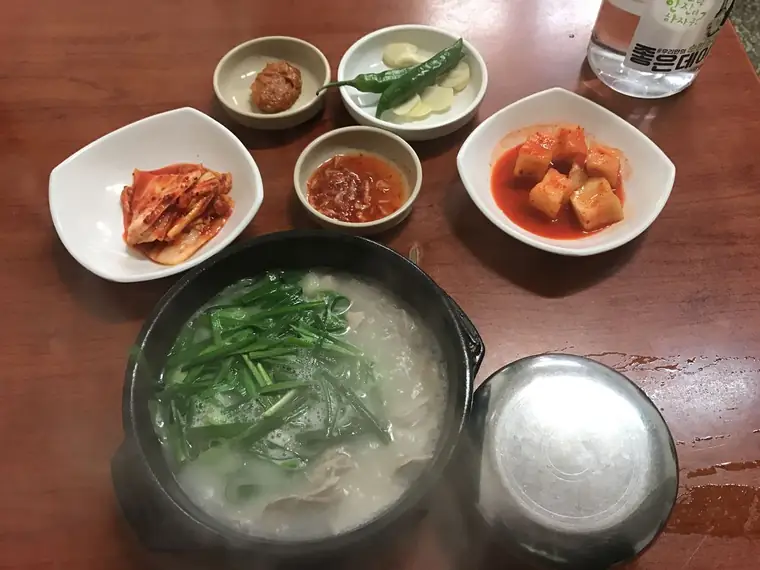
A bowl of dwaeji gukbap and the walk around it
Dwaeji gukbap is pork and rice in a milky broth, and in Busan it is lunch rather than a thing you seek out. The soup shops open early, stay open late, and sit in rows near the old train station. You can eat well for the price of a coffee back home, and the room will be loud, bright, and full of people eating alone.
This note covers one lunch and the four hours around it. If you only have one free afternoon in Busan, this is a good shape for it.
How to order without any Korean
Hold up one finger and say the name of the dish. That is the whole transaction in most shops. Two things are worth knowing before you sit down.
- The soup comes plain. The seasoning is on the table, not in the bowl. You add shrimp paste for salt, chive salad for sharpness, and chili paste for heat, a spoonful at a time.
- Rice sometimes comes on the side instead of in the broth. Either is correct. Tip it in if you want soup, keep it out if you want the broth clean.
- Water, side dishes, and refills are self serve. Nobody will bring them, and nobody is ignoring you.
If you do not eat pork
This is not the street for you, and there is no quiet substitution to ask for. Walk ten minutes to the fish market instead and eat grilled mackerel, which is sold in the same price range and in the same kind of room.
Where the shops are
They cluster in two places. Near Busan Station there is a short street of them, one after another, which is the easy option if you have just come off the train with a bag. In Seomyeon they are mixed into the shopping blocks, busier at night, and a better fit if you are already downtown.
Do not spend the morning choosing between shops. The ones with a line at noon are all fine, and the ones with no line at noon are usually fine too. Picking the nearest open door is the right move here.
The four hours around lunch
- Before. Start at the fish market around ten, while the tanks are still full and the floor is still being hosed. Walk it end to end once without buying anything.
- Lunch. Eat at noon, not at one. The rooms fill with office workers on the hour and you will stand in a doorway for twenty minutes.
- After. Climb into the painted village on the hill above the harbor. It is a real climb, maybe fifteen minutes of steps, and the view at the top is the one people come to Busan for.
- Late. Come back down for coffee near the water and let the afternoon go. Trying to add a beach to this day is how it stops being pleasant.
What this costs
Lunch, two subway rides, and a coffee. It is the cheapest good day in the city, which is the reason it is first in this series. Carry a little cash for the market stalls and pay by card everywhere else.
Want the rest of your days worked out like this?
Tell us your cities and dates and you get one page for each day, with the stops in the order you walk them, the train or bus between them, and the climbs marked before you hit them.
Build my plan, $12 a day Read the other notes